T’was the night before Christmas, and all through the town, all the people worked hard, to bring us up — or bring us down.
The activists spoke, as they were ignored. The electeds just yawned — they are always so bored.
They lobbyists conspired, the developers stole. Some government flacks left us all in a hole.
But don’t worry dear readers, because what did appear? But a loud chihuahua with a phone to her ear.
People knew in a moment, it must be Ladra, a watchdog con garras que nunca se amarra
And she whistled and shouted and called them by name, bad political players just playing a game.
Her eyes are wide open, her mouth in a smirk, she knows who’s the hero and who is the jerk.
So, raising a finger to the side of her nose, and leaving a love note in her sarcastic prose,
She gifts everybody with a beautiful list, while it’s quite incomplete she knows you get the gist.
This is Ladra’s inaugural Naughty and Nice list, featuring some of the people this year who did some good — they show up when needed, and do the work without a development budget or a PR firm — or some very very bad people who are only interested in themselves.
We’re not going to include electeds because, well, that would make the naughty list terribly long and the whole thing lopsided.
So, without further ado, here are Ladra’s picks for the naughty and nice in local government. Santa, take note. We’re going to start with the naughty list, because, admit it, that’s what people really want to read.
Naughty girls and boys
Miami Dade College Board of Trustees
The MDC Trustees earn a prime spot on the naughty list for treating public land like a party favor, gift-wrapped for Donald Trump’s presidential library. No meaningful public debate. No competitive process. Just a quiet nod and a wink to power. Sure, they had a “do-over” meeting — only after they were sued for violating public notice laws — but it was just a show. They had already decided how they were going to vote and had even broadcast it. They didn’t just give away land — they gave away MDC’s credibility as a public institution that’s supposed to serve students, not political vanity projects.
Cristina Crespi, Downtown Development Authority
As head of the DDA, Cristina Crespi presides over downtown’s favorite shell game: public money in, private profit out. Neighborhoods get press releases. Developers get subsidies. When residents ask who downtown is really being developed for, the answer is buried under glossy renderings and “stakeholder meetings” where the stakeholders never seem to be the people who actually live there.
Read related: Effort to dissolve Miami DDA cites ‘bloated’ salaries, redundancy, UFC gift
Despite earning more than $270,000 a year in taxpayer-funded compensation, Crespi was notably absent for much of the year while the DDA continued to hemorrhage money on consultants, marketing fluff and coriortte giveaways that deliver little benefit to residents.
Art Noriega, Miami City Manager
Art Noriega earns his spot on the naughty list for mastering the art of bureaucratic invisibility while everything around him burns.
As city manager, he is supposed to be the adult in the room — the non-political professional who enforces policy, protects process, and tells elected officials when they’re about to drive the city into a ditch. Instead, Noriega has perfected the Miami City Hall survival skill: looking the other way while chaos masquerades as governance.
Then there was the city’s purchase of overpriced furniture from his wife’s company. Not exactly an example of moral fortitude for his staff.
Read related: New report on furniture buys by Miami Manager Art Noriega is still 90K short
From selective enforcement to a glaring tolerance for dysfunction, his leadership style seems rooted in avoidance, not accountability. The result? A city where rules exist, but only for some; where residents beg for basic competence while insiders skate by untouched. That’s not management — that’s abdication.
Francisco Petrirena, Chief of Staff and A3 Foundation Founder
Francisco “Panchito” Petrirena absolutely earns a spot on the naughty list — not merely for ambition, but for how he’s turned public staffer status into political patronage with scarce public accountability. By day, Petrirena is chief of staff to Miami City Manager Art Noriega and was previously the city’s in-house lobbyist in Tallahassee, a role already rich with influence. While he sits on the public payroll, he also created and leads the A3 Foundation, a nonprofit with little to no public track record or transparency that has nevertheless pulled in huge taxpayer dollars and political earmarks.
In barely two years, A3 — registered at a West Miami townhouse and lacking contact info or evidence of substantive community work — has been tapped to receive nearly $1.2 million from Miami-Dade County for CountryFest rodeo expenses and $950,000 in Florida budget allocations, almost double what it originally asked for.
Critics — including county leadership — have raised concerns about how far and fast the money flowed, prompting calls for audits and stricter oversight after checks went out with minimal documentation or clear public benefit. Meanwhile, Petrirena has declined to provide transparent accounting for where the funds actually went, even after reporters asked pointed questions, choosing silence over explanation as public scrutiny mounted.
Read related: Shady charity with political ties gets $450K from Miami-Dade Commission
In other words: a public official moonlighting as the head of a barely-visible nonprofit that somehow becomes a magnet for public money — that’s not charity. That’s influence with benefits, and Ladra calls it as she sees it.
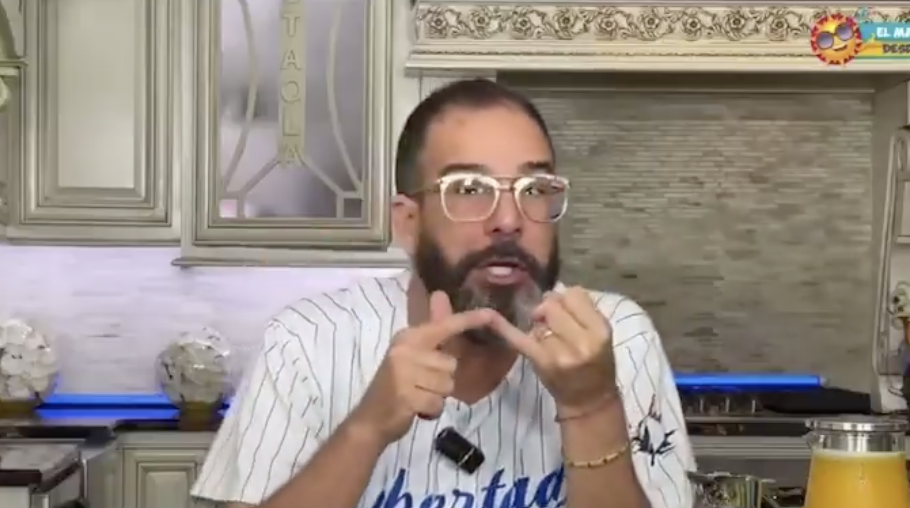
Alex Otaola, Influencer and Political Firestarter
Alex Otaola is a perpetual amplifier of division in Miami‑Dade’s civic discourse rather than a builder of bridges. The Cuban‑American social media personality and host of Hola Ota‑Ola! has parlayed his large online platform into relentless political agitation — from launching a hard‑line anti‑communist foundation in Miami (more on that later) that frames global politics in absolutist terms to publicly attacking community events, political leaders, and even normal civic organizing as intentional slights against him and his audience. Last year, he lost a fat chance bid for Miami-Dade mayor, getting 11%, This year, Otaola is so arrogant that he claimed a local baseball game was deliberately scheduled to undermine his show and likening its organizers to “doing things Cuba‑style.” He also used his national profile to pressure Miami‑Dade political debates, including calling for recalls and criticizing elected officials in ways that often inflame partisanship rather than encourage constructive engagement. He’s an agitator for the sake of discord and he often makes people think that he is actually a Cuban government plant in our community, here to sow chaos.
Melissa Tapanes, Lobbyist and Political Insider
Melissa Tapanes lands squarely on the naughty list for embodying Miami’s revolving-door political culture — where access matters more than outcomes and loyalty to power outweighs loyalty to the public. A veteran insider with deep ties to City Hall, Tapanes has repeatedly surfaced wherever influence is being brokered behind closed doors, not where transparency is being defended in public. She’s fluent in the language of “process” while benefiting from a system that too often excludes residents from real decision-making. In a city desperate for ethical daylight, her brand of behind-the-scenes maneuvering reinforces the very distrust that keeps Miami politics stuck in a permanent credibility crisis.
The Professional Meddlers (You Know Who You Are)
Lobbyists, fixers, and board-hoppers who appear everywhere power is being consolidated and nowhere accountability is demanded. They don’t run for office, don’t answer to voters, and yet somehow always get a seat at the table — and sometimes the whole table. Their specialty is whispering “inevitable” while democracy is quietly escorted out the back door.
Nice kids who want to help
Michael Rosenberg, President, KFHA
Michael Rosenberg doesn’t need theatrics to be effective. As the longtime president of the Kendall Federation of Homeowners Associations, he’s built a reputation on something radical in Miami politics: preparation. He reads the documents. He shows up consistently. He asks the uncomfortable questions — calmly, relentlessly, and with receipts.
Rosenberg was also one of the founders of the Pets’ Trust initiative, a referendum that was passed by an almost 2-to-1 margin, receiving approximately 65% of the vote, to provide for a concentrated spay and neuter program that would help cut down on the number of stray animals that keep the shelter above capacity. At one point, he spent several days in a cage at the shelter to prove a point. The county ignored the mandate from the straw ballot referendum, but that hasn’t stopped Rosenberg from being involved.
That’s not just civic engagement. That’s public service without the title.
Read related: KFHA hosts police and firefighter awards after officers shooting death
Under Rosenberg’s leadership, the KFHA also has events not only to inform residents (read; voters) on local issues and candidates, but also to honor first responders and teachers who get little appreciation elsewhere. He’s heading a toy drive for needy kids right now. He never stops.
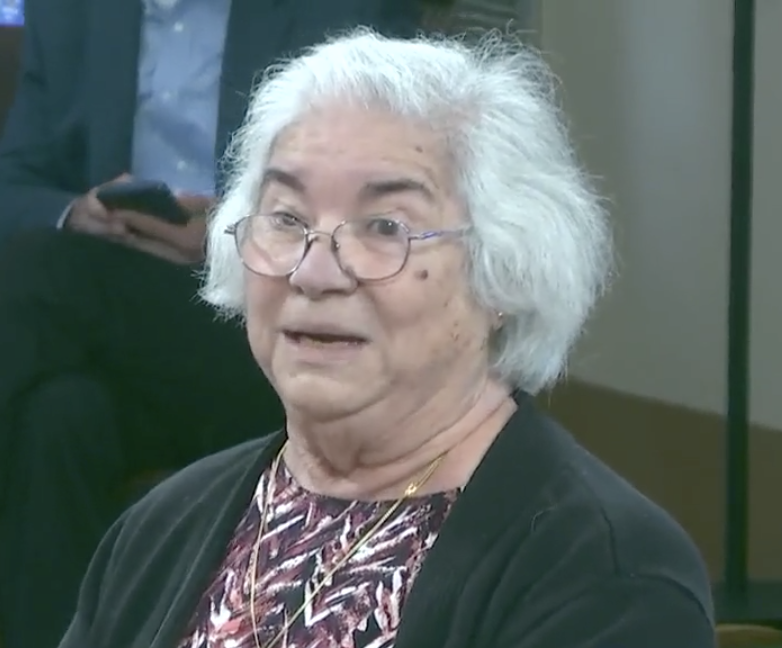
Maria Cruz, Coral Gables Relentless Gadfly Extraordinaire
Maria Cruz makes the nice list for doing what too many residents are told not to do: paying attention — and refusing to shut up about it. In Coral Gables, where decorum is often used as a weapon to silence dissent, Cruz shows up armed with facts, documents, and a memory that doesn’t reset after every election. She asks the questions that make officials — especially Mayor Vince Lago — squirm, connects dots others pretend not to see, and keeps pressing long after the applause has faded and the cameras are gone. She doesn’t do it for titles, contracts, or cocktail invites. She does it because someone has to remind City Hall that “civic engagement” isn’t a nuisance — it’s the job description.
James Torres, President, Downtown Neighbors Alliance (DNA)
James Torres is what happens when downtown residents refuse to be decorative. Under his relentless advocacy, DNA has become a real counterweight to unchecked development and turkey projects. He’s not anti-growth, just pro-people. Torres leads the fight for quality of life issues that politicians ignore: noise ordinance abuse, illegal billboards, homelessness and the corporate giveaways at the expense of residents.
He was the first to call out the Miami Downtown Development Authority for their bloated budgets, sweetheart deals and gifts to billionaire brands that don’t need the money — and is leading the charge to dissolve it. He is at the podium at almost every commission meeting, to make sure that downtown residents aren’t erased from conversations about their own neighborhoods.
Read related: Op Ed by DNA President James Torres: Miami doesn’t need a DDA anymore
Elvis Cruz, Morningside
If Miami handed out medals for unpaid neighborhood defense, Elvis Cruz would need a bigger shelf. In Morningside, he’s the kind of advocate developers fear and neighbors trust — informed, tireless, and allergic to BS. He doesn’t do it for credit. He does it because somebody has to stand between a community and the next “transformational” project that transforms everyone out. The pool, the park, the trees — he’s there to defend all of it. Ladra thinks he must be exhausted.
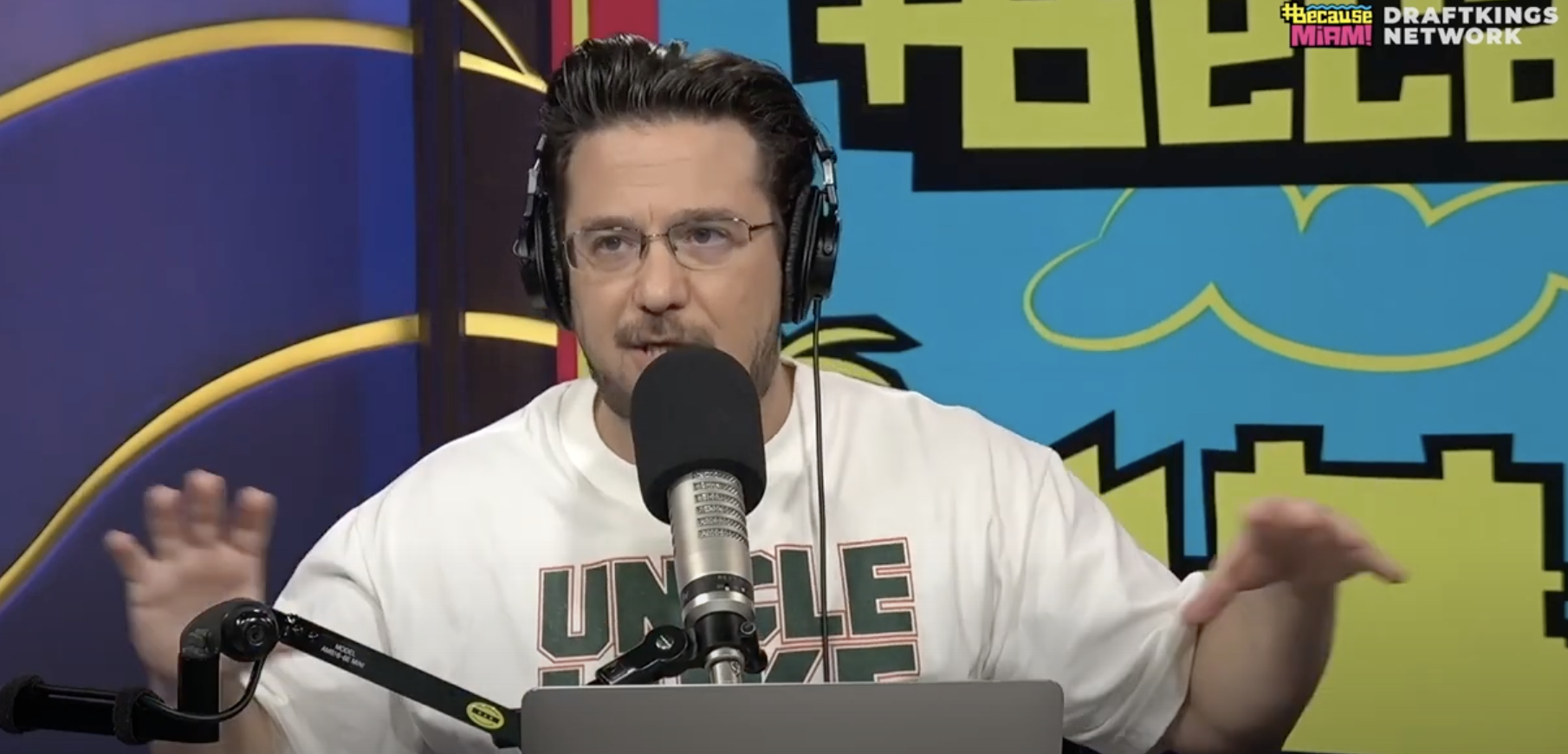
Billy Corben, Civic Agitator-in-Chief
Billy Corben makes the nice list not because he’s polite — he isn’t (thank goodness) — but because he’s effective. In a city built on selective amnesia, Corben insists on receipts. He names names, drags the uncomfortable facts back into the daylight, and refuses to let Miami’s power players rebrand yesterday’s scandals as today’s inevitabilities.
Through his podcast, video shorts, social media, and a relentless sense of moral irritation, the award-winning filmmaker has done what too few institutions here are willing to do: educate the public in plain language about how the grift actually works. Love him or loathe him, Corben has shifted the civic conversation, made corruption culturally uncool, and given regular residents the vocabulary to call BS when they see it. In Miami, that alone is a public service.
Billy McAllister, President, Metro-Dade Firefighters Local 1403
Billy McAllister earns his place on the nice list not just for riding into the budget battles like a fire chief with an ax to grind, but for doing it with his members and the public’s safety front of mind. As president of Local 1403, McAllister has repeatedly stepped into political crosswinds — including threatening legal action when Miami-Dade’s budget proposals risked hollowing out fire rescue capacity and forcing his department to absorb millions in costs while engines and rescue units remain critically short. His message isn’t corporate spin: it’s a simple and blunt warning that slower response times and fewer resources put lives on the line — and that firefighters shouldn’t have to beg for what they already should have.
McAllister doesn’t shrink from a fight with politicians; he calls them out when budgets and annexation plans could undermine public safety rather than protect it. In debates over annexations and service levels, he’s been willing to disagree publicly with mayors and municipal plans, insisting that expanding city footprints without adequate fire rescue infrastructure isn’t civic progress — it’s a liability.
That backbone matters in a county where life-and-death services too often get treated like budget line items. McAllister’s activism isn’t self-serving rhetoric; it’s about defending both his members and the communities that rely on them, even when those fights land him on the front page or in the courtroom. It’s the kind of grit that earns spills on the nice list — because sometimes doing what’s right is doing what’s loud and inconvenient.
Dr. Terry Murphy and Maribel Balbin, Powerhouse Duo
“Doctor” Murphy, thankyouverymuch, belongs on the nice list for being exactly the kind of public servant Miami-Dade rarely applauds loudly enough. With decades invested in policy, advocacy, and community affairs, he’s known as a steady voice who has spent years defending working families and pushing for equitable local governance — from living-wage fights to family leave and protections that others let fall silent. Having also served as a Democratic Executive Committee member and delegate candidate, Murphy is one of those people who doesn’t just talk about democratic participation — he lives it, working with volunteers and voters alike without ever hogging the spotlight. His commitment to good government and positive outcomes shows up again and again not in headlines, but in the tougher work of building policy muscle in everyday civic life. Ladra can’t wait to see what he does in the city of Miami as part of the new mayor’s volunteer advisory team. Ladra already said she should keep him.
Read related: Higgins rolls out her first team — and Miami, this is not City Hall as usual
Maribel Balbin is a grassroots dynamo who earns her spot on the nice list for being a behind-the-scenes organizer and community leader whose footprint on civic life extends well beyond titles. A long-time activist and past president of the League of Women Voters of Miami-Dade, Balbin has been on the front lines of voter empowerment, community outreach, and civic education. She’s not the headline-grabbing politician — she’s the one organizing the voters who make the elections count, pushing for engagement in times when many would rather tune out. That work, which includes leadership roles in community boards and Democratic Party structures like the Miami-Dade Democratic Executive Committee and state committee delegation, reflects a relentless drive to strengthen democracy from the ground up rather than parade her own profile.
Individually, the two engines of civic energy have done more for the Democratic Party than most of the current “leadership.” But together they are a Democratic backbone team that is right on every issue. They’re the quiet power couple of Miami-Dade Democratic activism. One brings deep policy chops and institutional memory, the other brings grassroots savvy and outreach finesse — and both bring the kind of long-term commitment that most political actors only talk about. In a landscape where so much progressive energy gets diluted by ego or photo ops, Murphy and Balbin show up year after year doing the work most people never see: organizing voters, training volunteers, mentoring new leaders, and keeping the Democratic Party connected to the communities it claims to serve. They don’t need the limelight, because the results of their labor — more registered voters, more engaged precincts, more knowledgeable voices at the table — speak for them. In the book of civic service, they’re the chapters everyone should read before they write the foreword.
Rank-and-File Public Employees who Go Above, Beyond
The career staffers who quietly flag problems, write careful memos, and get ignored by boards and authorities chasing headlines. They know where the bodies are buried — usually under parking garages — and still try to uphold the rules. They don’t make policy, but they often try to save the public from it.
In this list, Ladra would include Miami City Clerk Todd Hannon, who remains calm and even is able to tell the commission when they are doing something wrong without getting yelled at. In fact, Ladra thinks he is the only city official that commissioners haven’t yelled at one time or another. And his job must be miserable.
Director of Miami-Dade Corrections Sharea Green gets on the nice list too for leading the county’s corrections system through one of its most consequential turns in over a decade. Since her appointment as director in late 2023, Green has made improvements in staffing, training, safety and security practices to achieve compliance with the long-running federal consent decree overseeing Miami-Dade jails — progress that culminated in a federal judge formally lifting that oversight after significant reforms were implemented.
Laura Morilla has spent decades quietly moving the needle on community engagement and advocacy within Miami‑Dade’s government. As executive director of the Office of Community Advocacy — the hub for advisory boards that amplify voices from the Commission for Women to the Black Affairs Advisory Board — she’s one of those rare county employees who actually makes sure the machinery of local government hears the people it’s supposed to serve.
Read related: Winners and losers from the runoffs in Miami, Miami Beach and Hialeah
Morilla didn’t just land in that role yesterday. She has spent more than 25 years in public service, including long involvement with the Commission for Women and other community advisory bodies, stewarding boards that give residents a seat at the table long before “community engagement” became a buzzword. Under her watch, the Office of Community Advocacy has facilitated meaningful participation from diverse constituencies and helped sustain spaces where historically under‑represented voices — from women to Hispanic and LGBTQ communities — can influence county policy and culture.
In a political ecosystem that often rewards visibility over substance, Morilla’s work is the kind of steady, behind‑the‑scenes citizenship that actually makes Miami‑Dade’s government more responsive and inclusive — and she deserves credit every time those advisory boards open a meaningful conversation between residents and the powers that be.
Ditto for Giselle Marino, one of those behind‑the‑scenes civic connectors who actually makes government talk to the people it serves. As communications and media director for Miami‑Dade’s Office of Community Advocacy, Marino leads external affairs for the 12 advisory boards. Before joining the Office of Community Advocacy, Marino brought more than two decades of journalism experience — including Emmy‑winning reporting — into public service, building bridges between county government and a diverse public through clear communication and accessible outreach. Her role isn’t glamorous: she’s the one getting meeting information out, hosting bilingual conversations about advisory board work, and making sure that county initiatives actually reach the people and communities they’re meant to serve. That’s the kind of civic leadership that doesn’t always get credit, but does make local government more inclusive, transparent, and effective — and that’s why she’s on the nice list.
If you, dear reader, can think of someone Ladra forgot, please feel free to add your own nice and naughty characters in the comments below.
And to all a good night!!
If you like what you read on Political Cortadito, please consider making a contribution to support the independent, government watchdog journalism on this website. Thank you!
The post Naughty or nice? Ladra has her own list of our local good kids and bad ones appeared first on Political Cortadito.
Read MorePolitical Cortadito